Imagine discussing international trade law with a classmate from Tokyo, or exploring environmental ethics with a student from a coastal town in the Dominican Republic. These moments are not rare occurrences in Canada’s education system — they happen every day.
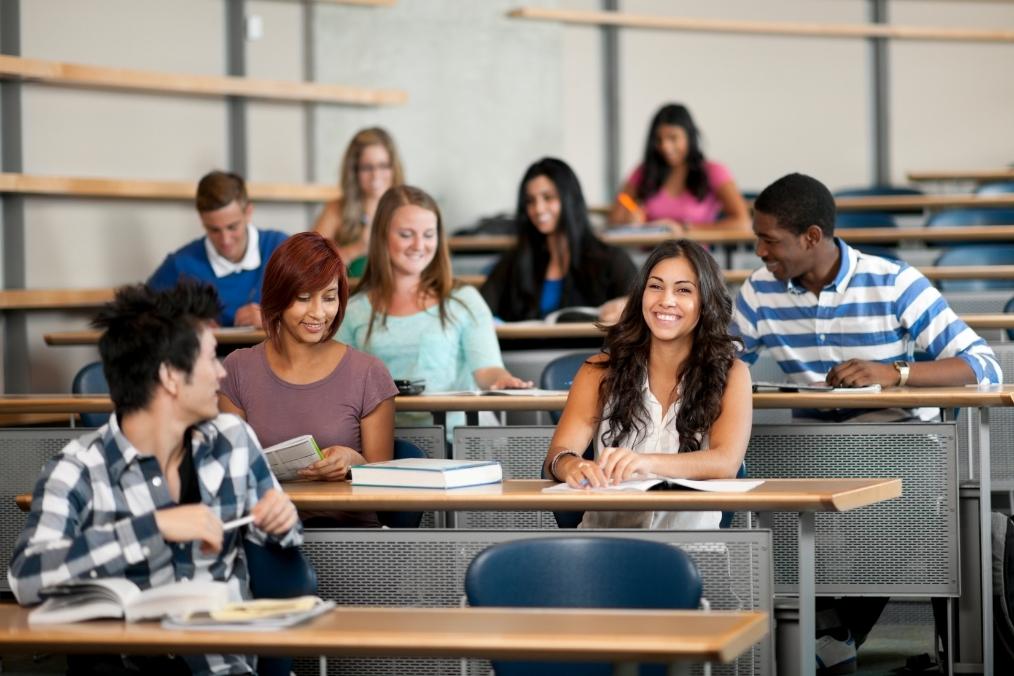
Step into any Canadian university or college and you’ll find more than a classroom. You’ll enter a microcosm of the world. With students representing over 150 countries, learning in Canada extends far beyond textbooks.
In Canada, your degree becomes more than a credential. It becomes a gateway to global perspectives, lifelong connections, and a deeper understanding of today’s interconnected world. In this blog, we will discuss how cultural diversity in Canada enhances your education.
Diverse Classrooms Create Stronger Learning Experiences

In environments where people share similar backgrounds and life experiences, Students may reach the same conclusions and overlook new ideas or lose to gain different perspectives. If students constantly share the same ideas, they’ll often think in similar ways. When perspectives are limited, students often reach the same conclusions using the same logic.
Canadian classrooms, however, act as a powerful disruptor to this pattern. When you share a seminar table with students from different corners of the world, your default assumptions are constantly challenged.
A history lesson on colonialism, a business case study on consumer behavior, or a debate on medical ethics takes on new meaning when viewed through multiple cultural lenses. As a result, students are pushed to think beyond familiar frameworks. This intellectual friction is what strengthens critical thinking and creates deeper, more meaningful learning experiences.
Cognitive diversity is one of the strongest drivers of innovation. Research consistently shows that multicultural groups are more effective at problem-solving than uniform ones. Why? Because diverse teams bring a broader range of experiences, perspectives, and problem-solving approaches to the table.
In Canada, you are not just learning what to think. You are learning how to synthesize different viewpoints into thoughtful, creative solutions — a skill that is essential in today’s global economy.
Navigating a multicultural academic setting requires a high degree of cognitive shifting. Students learn to adapt their communication styles and analytical frameworks depending on who they collaborate with. Over time, this intellectual flexibility becomes a mental muscle. Once developed, it allows students to approach complex problems with a more open, agile, and confident mindset.
The Strength of the Mosaic, Canada by the Numbers.
Canada brings the world together. More than 250 ethnic origins call Canada home. As a result, university campuses act as global meeting places.
This cultural diversity creates a rich linguistic mosaic. Students speak over 200 languages as their first language. Because of this, Canadian classrooms are among the most diverse learning environments in the world.
Canada’s international presence remains incredibly strong, and its global reputation is unshakable. As of early 2026, approximately 725,000 international students live and study in Canada. Even after the introduction of new study permit caps, the country continues to stand as one of the world’s premier education hubs.
In many public colleges and universities, international students represent a large number of the total enrollment. This creates a unique opportunity: domestic students don’t just read about global markets; they build projects alongside the very people who will lead them.
So what makes Canada so attractive to international students? Well, according to the CBIE (Canadian Bureau for International Education), the top three reasons students choose Canada are:
- Safety: Students trust Canada as a stable and secure nation.
- Quality: The world recognizes the high standards of the Canadian education system.
- Inclusion: Canada offers a society that values tolerance and rejects discrimination.
Language and Communication, Mastering Global Dialect

Canada’s educational landscape is a rich tapestry of hundreds of languages. While the country has two official languages, English and French, classrooms reflect far more linguistic diversity. For students, this environment becomes a masterclass in effective communication — one that extends far beyond textbooks and lectures.
Developing “Cultural Intelligence”
In a diverse classroom, you quickly learn that how you say something is often as important as what you say. Students in Canada become naturally adept at navigating different communication styles:
- High-Context vs. Low-Context: You learn that some cultures value directness, while others prioritize subtle cues and social harmony.
- Active Listening: When collaborating with peers for whom English or French may be a second or third language, you develop patience and active listening skills that are essential for leadership.
Students become more aware of linguistic nuances and more empathetic toward the challenges of cross-cultural dialogue.
Professional Articulation
One of the greatest benefits to your education is learning to explain complex ideas to people with different foundational references. If you can successfully pitch a project to a group consisting of a domestic student from rural Alberta, an international student from Lagos, and an exchange student from Berlin, you’re one step closer to mastering the art of universal communication.
Preparation for the Global Workforce

In today’s global workforce, your ability to code or analyze data is only half the battle. The other half lies in working effectively with others, especially within diverse teams. By Studying in Canada, you begin building this skill early by immersing yourself in a culturally diverse learning environment that mirrors the modern workplace.
The Rise of Emotional Intelligence (EQ)
As AI takes over more routine tasks in 2026, human-centric skills like Emotional Intelligence (EQ) and Adaptability have become the most valuable currencies in the job market.
- Teamwork: Today, 80% of employers say strong teamwork skills are a top priority. When students learn alongside peers from Nigeria, India, France, and rural Ontario, for example, they gain real experience working with different perspectives. This prepares them to lead teams that are spread across countries and cultures.
- Conflict Resolution: You learn to navigate disagreements not just based on what is being said, but by understanding the cultural context behind the perspective.
Adaptability: The Core Skill of 2026
Today’s workforce changes quickly. To keep up, workers must continue learning.
When students regularly engage with different viewpoints, they become more flexible thinkers. They learn how to unlearn old ideas and adapt to new information. This skill helps them stay prepared for the future, especially in a world where nearly 40% of essential job skills are expected to change every few years.
When you graduate from a Canadian university, employers see more than a qualification. They see a graduate ready for the global stage— someone who can adapt easily to different cultures and professional environments.
Social Intelligence and Empathy

Textbooks may provide the data, however, diversity and real experience provides the context. In Canada, education is not just an intellectual journey, it is an emotional one. By living and learning alongside people with vastly different life stories, students develop a level of social intelligence and empathy that cannot be taught in a lecture hall.
We naturally gravitate toward people who think like us, which creates echo chambers. The Canadian educational system intentionally breaks these bubbles.
- Humanizing the Global News: When you hear about a crisis or a triumph in another part of the world, it’s no longer just a headline, it is felt through the personal stories and family ties of those around us. This transforms abstract sympathy into genuine, lived empathy.
- Dismantling Stereotypes: Direct, daily interaction is the most effective way to erase prejudice. When you study, eat, and stress over exams with a diverse group, stereotypes dissolve and are replaced by a deep understanding of individual character.
Social intelligence is the ability to recognize and manage your own emotions while understanding those of others. In multicultural learning environments, students develop social fluency — the capacity to navigate differences with awareness and respect.
- Perspective-Taking
Students learn to ask, “How might this situation look to someone from a different background?” before reacting. This habit encourages reflection, empathy, and more thoughtful decision-making.
- Inclusive Leadership
Graduates of Canadian institutions are often better prepared to lead with inclusivity. They do not simply tolerate differences. Instead, they actively seek out diverse perspectives and value voices that are often missing from the conversation.
Conclusion: The Canadian Edge is Your Global Passport

As we look toward the future of work and society in 2026, it is clear that a degree alone is no longer enough. The world demands more. It demands thinkers who can bridge cultural divides, leaders who lead with empathy, and innovators who can synthesize a world of perspectives into a single solution.
Choosing to study in Canada isn’t just a choice about which university or college to attend; it’s a choice to immerse yourself in a cultural mosaic that will challenge you to grow and ultimately redefine you. Through the lens of diversity, you gain:
- Cognitive agility to solve complex problems.
- Communication mastery that transcends borders.
- Social intelligence that builds lasting human connections.
Canada’s greatest strength has always been its people and the way they come together. By becoming a part of this educational landscape, you aren’t just preparing for a career— you are preparing for a life of global impact.
The world is getting smaller, but your perspective is about to get much, much bigger.
UniApplyNow Can Help You Get Started in Canada
At UniApplyNow, we use innovative technology to simplify every step of the international student application process. From university search and career planning, to college applications and visa requirements. Our system keeps students, agents, and universities connected and up to date through the entire application and compliance process.
Our team of Academic Advisors are ready to help with program searches, eligibility checks, and complete application support. With this, students can explore options, compare requirements, and build a clear study plan with expert guidance. We are here to ensure every student feels supported, guided, and heard throughout their journey.
Whether students choose the ILAC Pathway to meet English requirements or already meet the required level, now is the right time to begin. With reduced barriers and simplified 2026 regulations, students can move forward with confidence and focus on reaching their academic goals in Canada.
With the recent updates expanding opportunities for graduate students in Canada, UniApplyNow and ILAC are here to support at every stage, from preparation to enrollment.
✨ Start Now: Book a free advising call with UniApplyNow to review your program options and apply with confidence.
💫 Read our latest announcement. UniApplyNow is no longer charging processing fees. Contact us now for more information.
🎓 Want to read more? F-1 Students Still Welcome in the USA: From F-1 to H-1B. Opportunity Still Awaits.